Power BI and Fabric catalog with field-level lineage

Fabric Lens catalogs the workspaces, models, reports, and notebooks in your tenant and resolves how they depend on each other, from report visual to source system. Teams deploy it to plan a migration, cut capacity cost, or prepare for AI, and keep it to support ongoing governance and self-service BI.

Available on Azure Marketplace. Eligible to count toward your Microsoft Azure Consumption Commitment (MACC).

Illustration of a connected Fabric environment
  • Workspaces and capacities
  • Semantic models and dataflows
  • Reports and visuals
  • Notebooks and pipelines
  • Lakehouses and warehouses
  • Gateways and connections

Where teams start

Three moments that call for a closer look.

Migration and rationalization

Inventory, duplication, and dependencies across the estate, with Spotfire and Tableau content cataloged alongside Power BI, so you know what to move, what to consolidate, and what to retire before the migration starts.

Migration intelligence
Capacity cost

Capacity and refresh load tied to the content responsible, ranked so the heaviest consumers surface first, with usage history kept well beyond Fabric's ~28-day activity window.

Cost & capacity optimization

AI readiness

Accurate definitions, automatic documentation, and visual-to-source provenance, available to Copilot and agents through read-only MCP.

AI-ready semantic governance

All three draw on the same catalog, and Fabric Lens stays installed after the deadline, so it keeps supporting rationalization, governance, security, and self-service BI.

The platform

A dependable record of your Fabric and Power BI assets.

DAX, Power Query, visual bindings, partitions, notebook code — the actual definitions get read, then connected to the objects they reference. That's the difference between a list of assets and a catalog you can govern change against.

True lineage

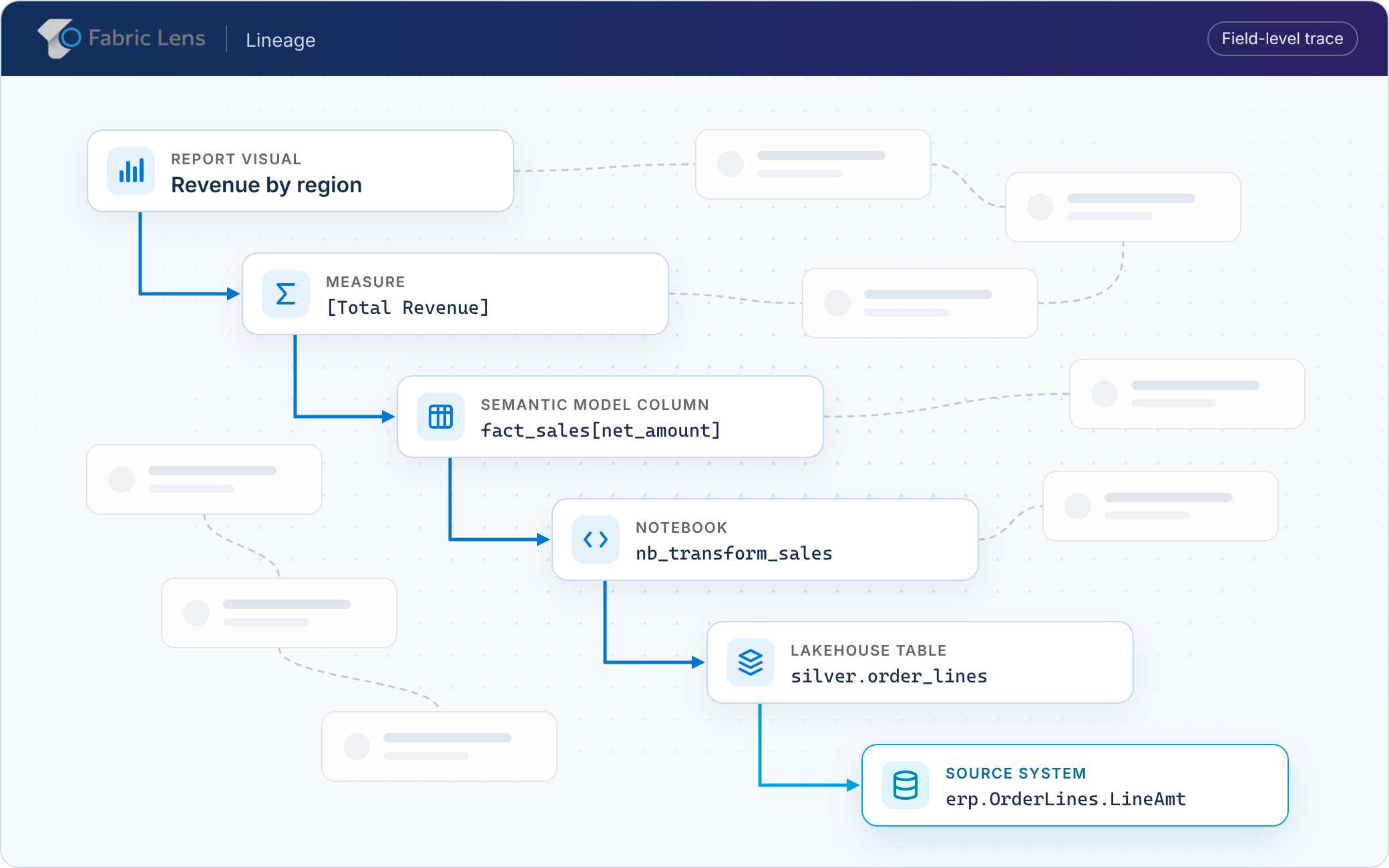
Trace lineage from visual to source.

Dependencies are resolved with static analysis, not name or tag matching, across Power Query, pipelines, DAX, notebooks, semantic models, and report visual bindings.

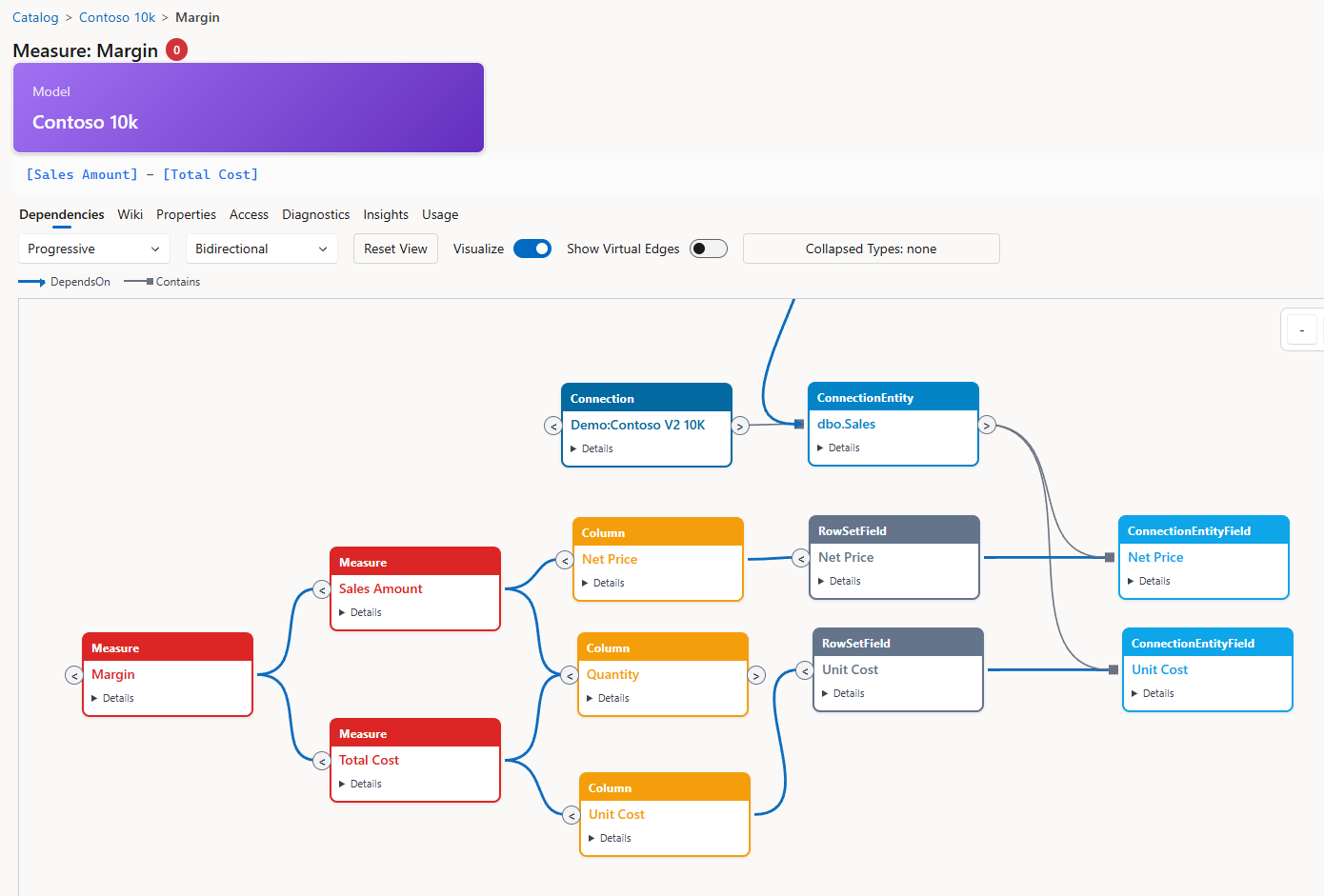
Fabric Lens dependency graph tracing a Margin measure through DAX measures, semantic model columns, source fields, and a SQL Server connection
Trace a dependency in either direction, from report visual to source system.

Traverse the graph in either direction: from a visual to the fields and sources behind it, or from a source change to the reports and users it affects. That same graph feeds documentation, diagnostics, and rationalization work elsewhere in the platform.

Remote lineage plugins extend the analysis beyond Fabric and Power BI, following dependencies into connected source systems, including SQL Server objects behind views and Databricks workloads.

Explore lineage

AI readiness

Give Copilot and agents trusted analytics context.

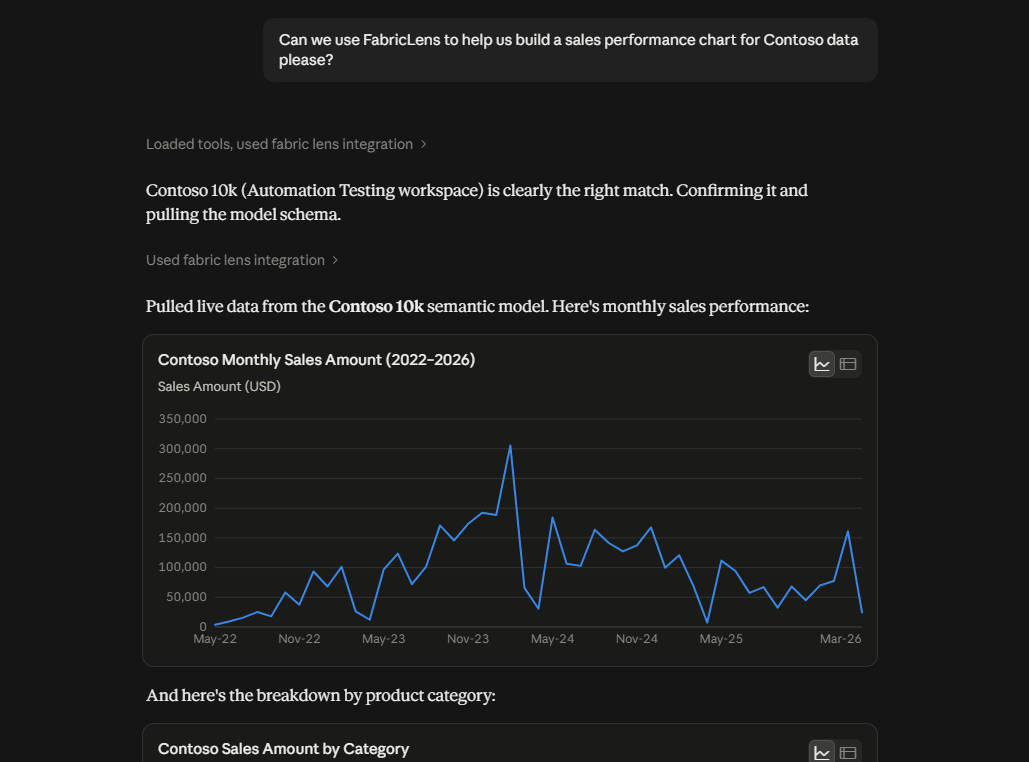
The tenant's technical and semantic record is available to AI workflows through MCP and Query Assist, which find assets, resolve their relationships, and ground answers in the definitions your organization already maintains.

AI assistant using the Fabric Lens integration to identify the appropriate semantic model and return sales performance data
Use Fabric Lens context through MCP to help AI workflows identify the right model before retrieving data.

The metadata that makes the tenant easier to manage is the same metadata that grounds a better AI answer.

Explore AI capabilities

Operational model

Continuously discover, resolve, and monitor.

Scheduled scans work from the assets and definitions already present in your tenant, and keep the catalog aligned as things change — no separate instrumentation to install.

  1. DiscoverEnumerate tenant assets and their configuration.
  2. ExtractRead the technical definitions behind those assets.
  3. ResolveMap references to the assets and fields they use.
  4. MonitorSurface governance, usage, and operational signals.

Deployment

Run Fabric Lens on your terms.

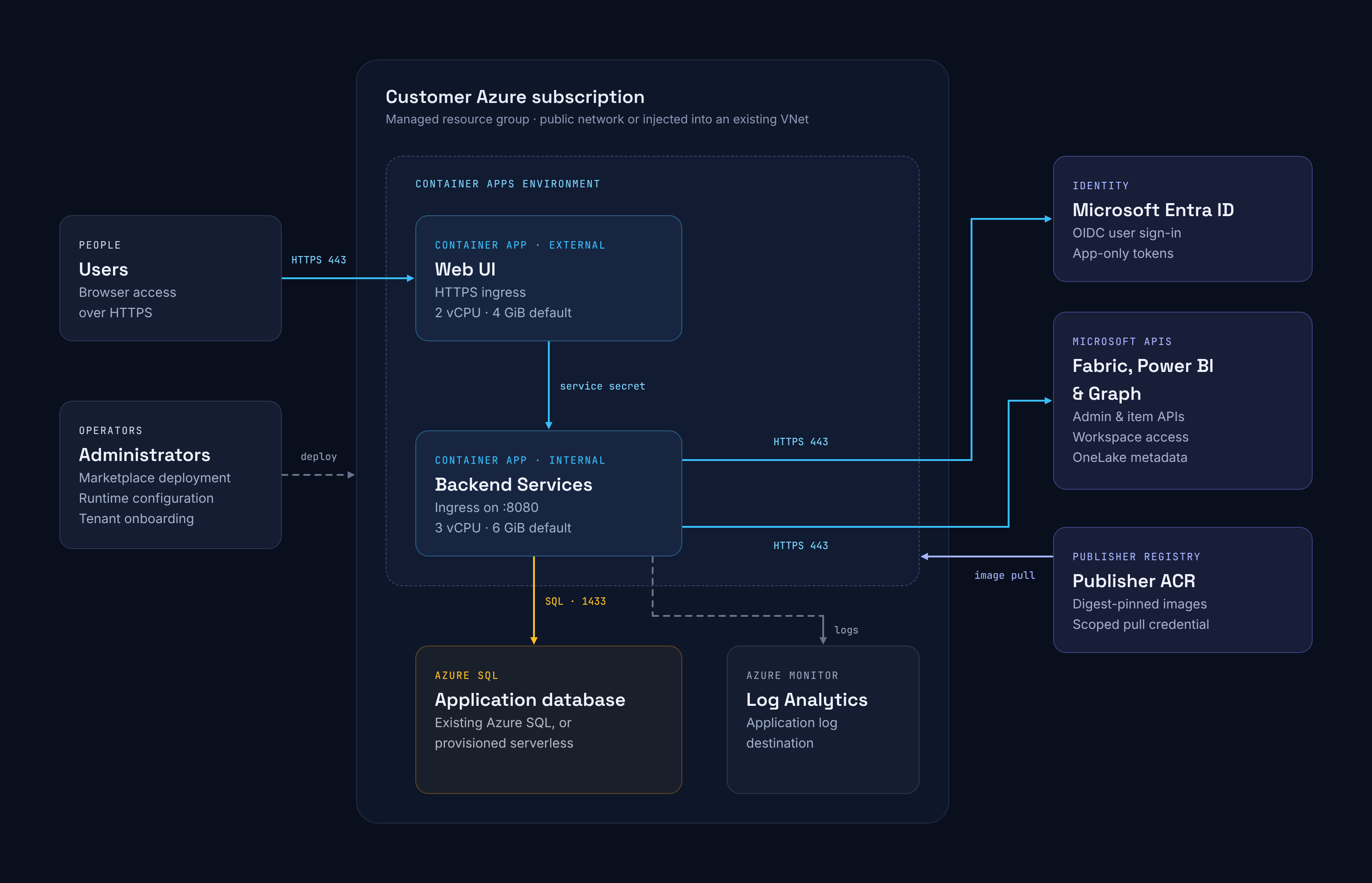
Deploy into your cloud subscription, private cloud, or on-premises environment. Tenant metadata stays under the access controls your organization already has in place.

Buy Fabric Lens through Azure Marketplace on your existing Microsoft agreement. Purchases are eligible to count toward your Microsoft Azure Consumption Commitment (MACC).

View deployment documentation View the Azure Marketplace offer
Fabric Lens deployment architecture showing users and administrators, web UI and backend services in a customer Azure subscription, with connections to Microsoft Entra ID, Fabric and Power BI APIs, Azure SQL, Azure Monitor, and a publisher container registry

Next step

See it against your own estate.

Bring a real migration, capacity, or AI-readiness question and we'll show you what Fabric Lens finds. Ready to buy? Fabric Lens is available on Azure Marketplace and MACC-eligible.