
Power BI migration, Fabric capacity cost, and AI readiness

Most teams come to Fabric Lens with a specific problem to solve: a platform migration, a capacity bill that keeps climbing, or an AI rollout that needs trustworthy context. All three come down to knowing what you have and how it connects, and Fabric Lens builds that picture from the platform you already run.

Available on Azure Marketplace. Eligible to count toward your Microsoft Azure Consumption Commitment (MACC).

Migration and consolidation

Know what you have before you move it.

Migrating off another BI platform such as Spotfire or Tableau, or consolidating Power BI onto Fabric capacity, starts with the same problem: knowing what's actually there before it moves. Fabric Lens catalogs workspaces, models, reports, and notebooks, and resolves the dependencies between them, ahead of the move.

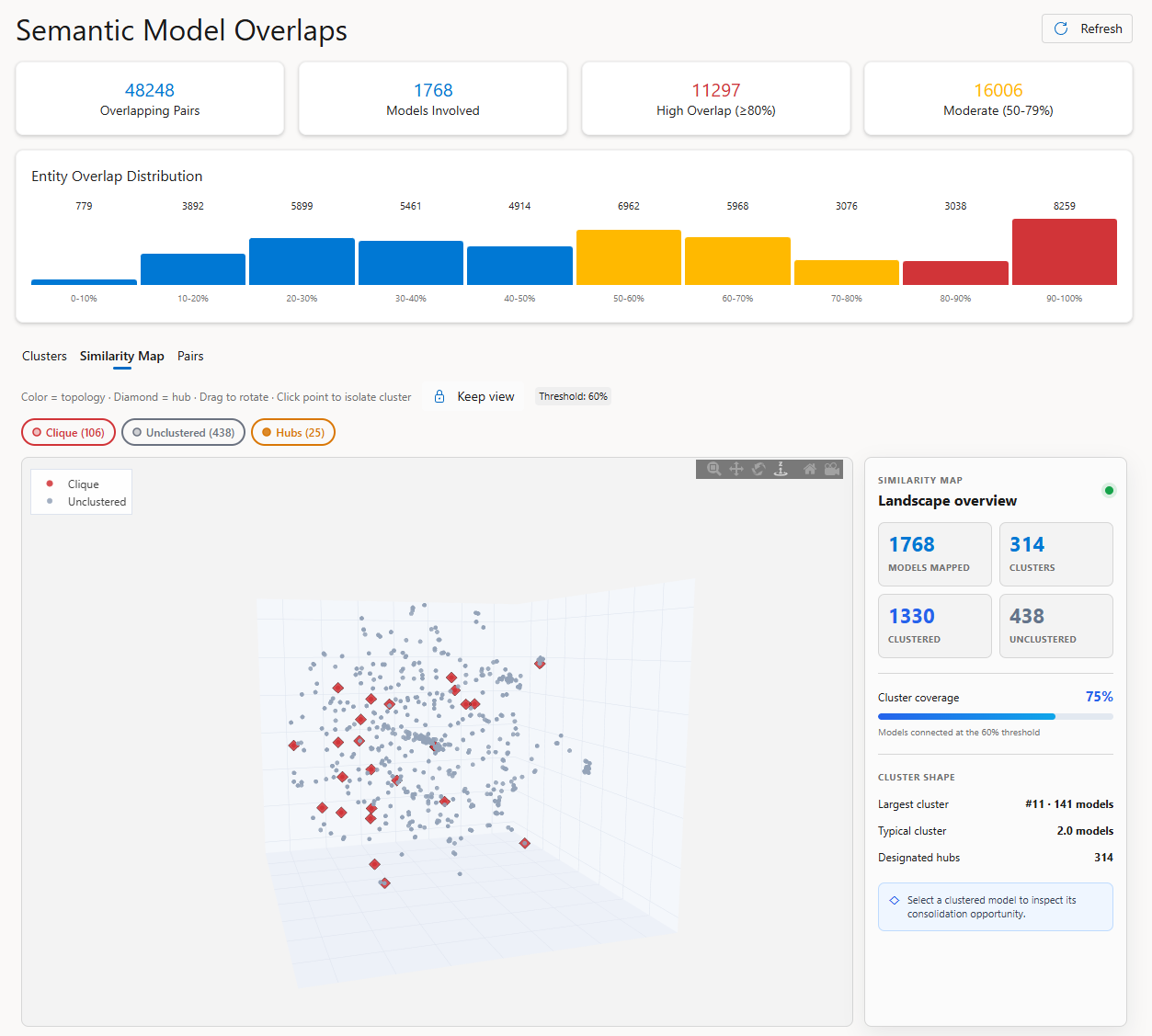
Model and report similarity analysis compares actual definitions and shared objects, not just similar names, so you can tell a genuine duplicate from something that only looks like one. Lineage resolved from report visual to source system shows what still depends on what, so you can sequence a migration plan instead of guessing what's safe to leave behind.

Explore model similarity
Fabric Lens semantic model overlap analysis showing overlap distribution, model clusters, and a similarity map
Identify duplication and assess the impact of consolidation.

Cost and performance

Reduce spend and improve performance with evidence.

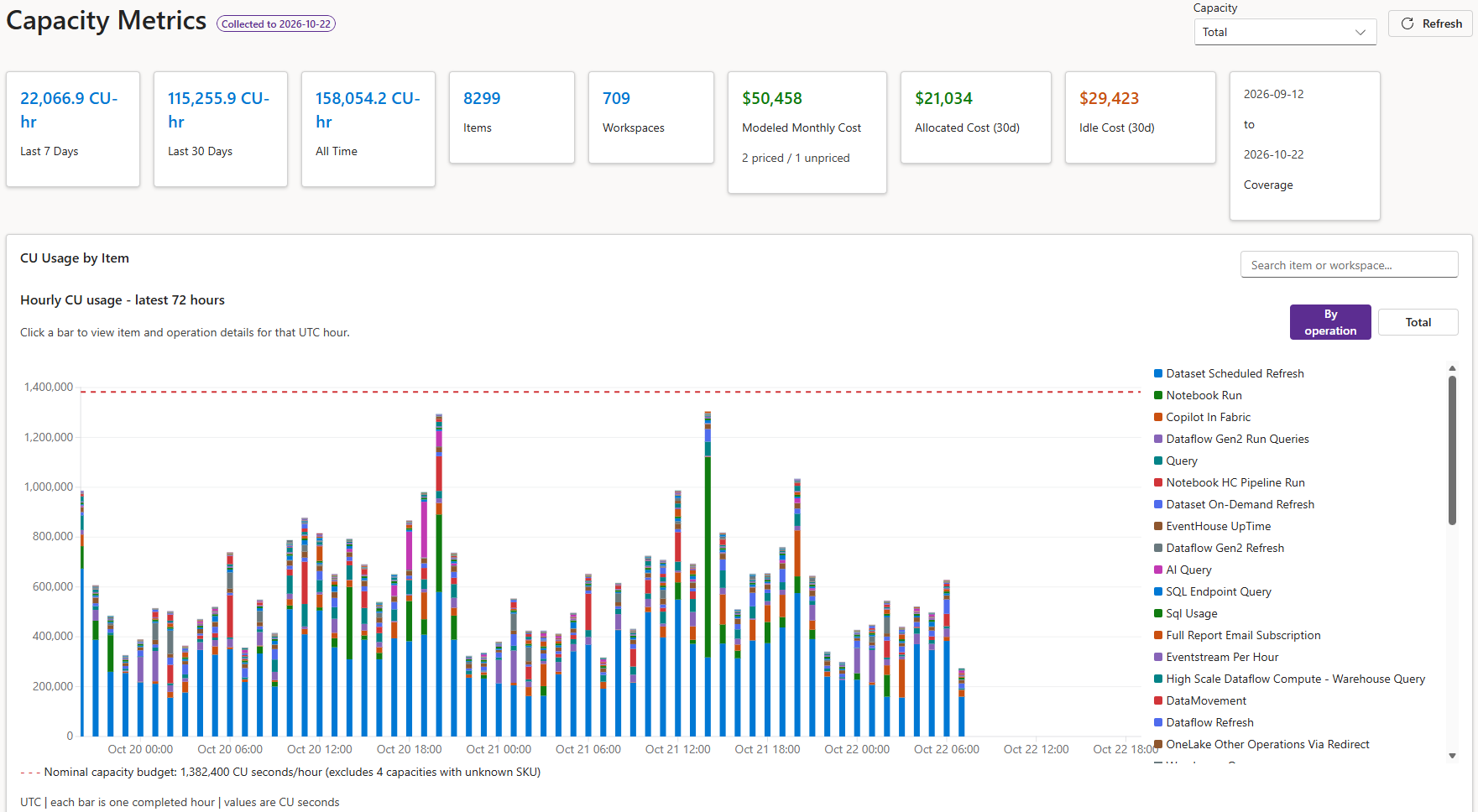
Refresh schedules, oversized models, and orphaned content quietly drive up a Fabric bill long after anyone remembers building them. Fabric Lens ties capacity consumption and refresh schedules to the specific assets responsible, ranked so the heaviest consumers surface first, and keeps usage history well beyond Fabric's own ~28-day activity window.

Model and report similarity flags duplicated content before it's paid for twice, and unused-column analysis trims dead weight with the downstream lineage already worked out, so a cost or performance fix targets the right object instead of the whole tenant.

Explore model cleanup
Fabric Lens Capacity Metrics dashboard showing CU usage by item, hourly capacity consumption, modeled monthly cost, allocated cost, and idle cost
Trace capacity consumption and cost across Fabric items and workspaces.

AI and Copilot initiatives

A semantic layer that agents can rely on.

Ask an AI system a business question, and it has to find the right model first, then trust that the metric it's using isn't defined two different ways in two different places. Measure convergence and table-relations analysis catch those conflicts before an AI system ever picks a definition.

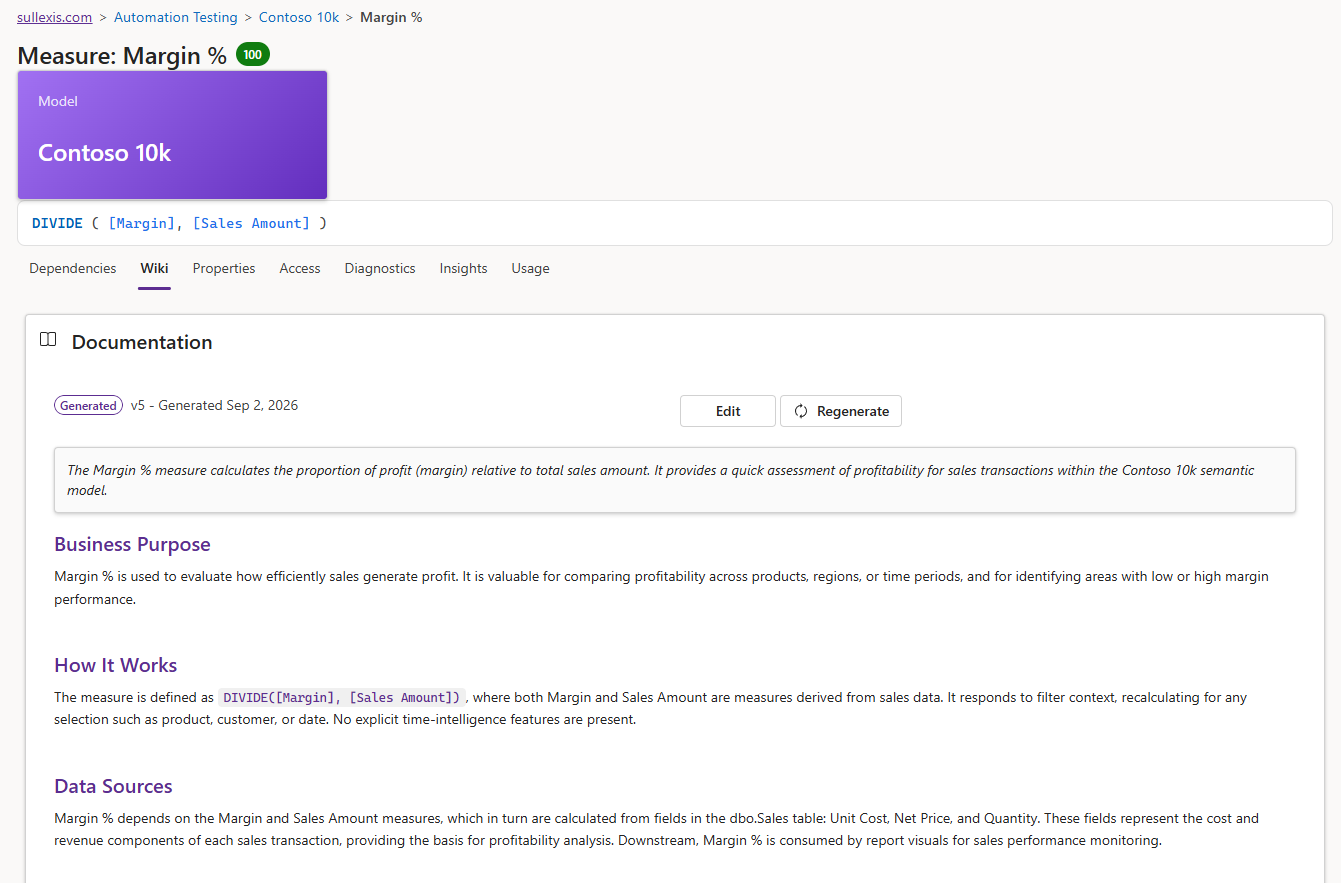
Both the business wiki and the technical documentation, generated from the tenant's actual metadata and kept current as it changes, give a grounding layer real content to work from. Dependencies resolved down to individual DAX measures, columns, and source fields, not just table names, give AI-generated queries a real shot at being right, both syntactically and semantically.

Explore AI capabilities
Fabric Lens Wiki page for the Margin % measure, showing its DAX definition, business purpose, calculation details, data sources, and downstream use
Generated measure documentation connects a business definition to its formula and source data.

By role

One catalog. A view for every team.

The teams that run the estate each bring a different problem to it. Each draws on the same capabilities, combined differently.

Compliance/security lead, IT admin

Answer access reviews and offboarding questions from one place.

Access reviews, offboarding, and incident response all turn on the same question: who can reach what, and through which grant. Answering it usually means checking workspaces and apps one at a time. Fabric Lens resolves effective access ahead of time, makes it searchable by person or by asset, and pairs it with the activity history that shows what an account actually used.

Platform/BI governance owner

Decide what to keep, consolidate, or retire, with usage behind it.

Reports and models accumulate faster than anyone retires them, and every cleanup, license renewal, or disputed decision comes back to what's actually used. Fabric Lens combines long-run usage history with similarity and unused-object analysis, so a retirement or consolidation decision comes with the usage and the downstream impact already worked out.

Capacity admin, BI ops lead

Find the content behind slow reports and capacity overruns.

Slow-report complaints and capacity overruns rarely point at their own cause, and the usual responses are buying more capacity or reshuffling refresh schedules by guesswork. Fabric Lens ties consumption and refresh load to individual assets, then points to the duplicated models and unused complexity adding to it.

Center of Excellence / governance lead

Keep a trustworthy record as BI scales across teams.

Scaling BI across more teams, and standing behind an executive review, both depend on an accurate record of what's there, and that gets harder to keep by hand as the tenant grows. Fabric Lens keeps the inventory and documentation current through scheduled scans, surfaces conflicting metric definitions, and applies the organization's standards tenant-wide.

Next step

See it against your own estate.

Bring a real migration, capacity, or AI-readiness question and we'll show you what Fabric Lens finds. Ready to buy? Fabric Lens is available on Azure Marketplace and MACC-eligible.